
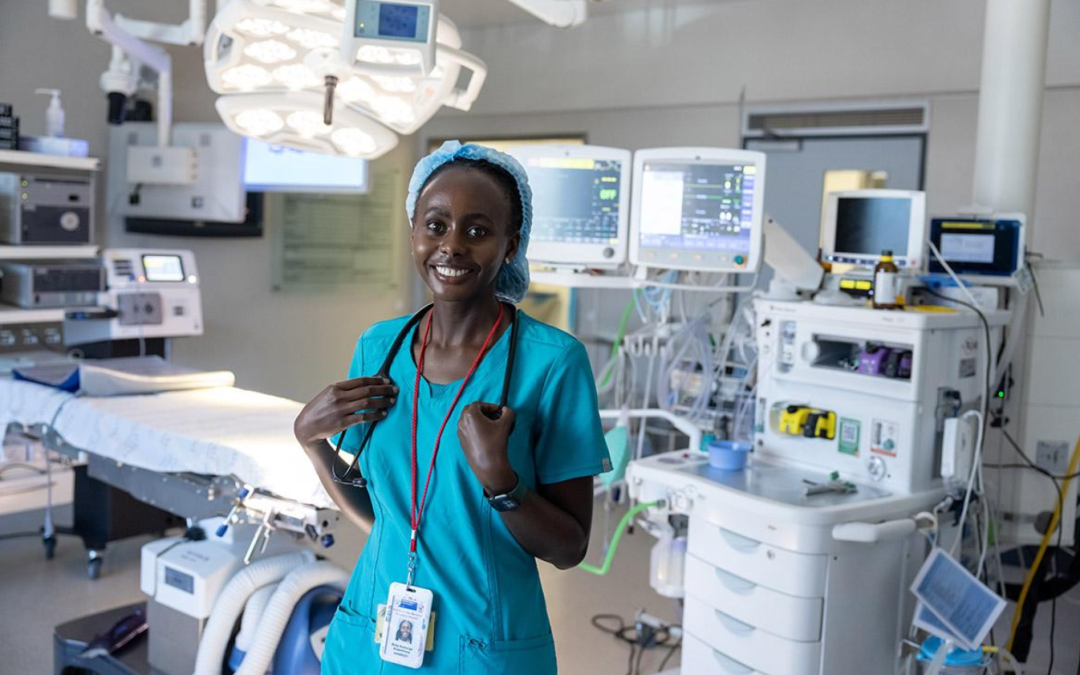
Over the past year, I have completed an intensive fellowship in paediatric anaesthesia and critical care that has significantly strengthened my clinical expertise, professional confidence, and academic direction. This period of training has been transformative, equipping me with advanced skills in the care of critically ill neonates and children while broadening my exposure to complex surgical and critical care environments.
A major achievement was the development of strong competencies in paediatric cardiac anaesthesia and cardiac critical care. I gained hands-on experience in the perioperative management of children with congenital and to a smaller extent acquired heart disease, including preoperative assessment, intraoperative anaesthetic management, and postoperative critical care. This training enhanced my understanding of paediatric cardiac physiology, haemodynamic monitoring, and the tailored use of vasoactive medications.
My critical care training progressed significantly, particularly in managing postoperative cardiac patients, neonates, and children requiring advanced organ support. I became more confident in ventilator strategies, haemodynamic optimisation, sedation practices, and multidisciplinary decision-making within the paediatric intensive care unit. Exposure to complex cases sharpened my ability to recognise early deterioration and intervene promptly.
Throughout the year, I substantially improved my ultrasound skills, particularly in point-of-care ultrasound (POCUS). This included ultrasound-guided vascular access, focused cardiac ultrasound, lung ultrasound and regional anaesthesia. These skills have become integral to my clinical practice, improving patient safety and diagnostics in both anaesthesia and critical care settings.
I also developed a strong understanding of the use of processed electroencephalography (EEG) in paediatric anaesthesia, appreciating its role in guiding depth of anaesthesia, reducing the risk of intraoperative awareness and burst suppression, and optimising anaesthetic dosing in neonates and children. This knowledge has strengthened my approach to neuroprotection and individualised anaesthetic care.
Another key achievement was extensive exposure to anaesthesia for neonatal emergencies, including emergency surgeries in fragile neonates with limited physiological reserve. Managing these cases enhanced my skills in rapid assessment, thermoregulation, airway management, fluid and blood product administration, and communication.
In addition, I gained valuable experience in anaesthesia for organ transplant procedures, participating in the perioperative care of children undergoing complex transplant surgeries and organ procurement procedures: liver and renal transplant surgeries. This broadened my understanding of multi-organ physiology, immunosuppression, massive transfusion strategies, and the coordination required within large multidisciplinary teams.
Beyond clinical skills, the fellowship facilitated meaningful professional networking and academic growth. I established a strong connection with the director of VAST (Vital Anaesthesia Simulation Training), which has evolved into an ongoing collaboration. We are now actively working together to develop and deliver simulation-based training scenarios in neurosurgery, reflecting my growing interest in medical education, simulation design, and faculty development.
In conclusion, the one-year paediatric anaesthesia and critical care training has been a period of substantial achievement and growth. It has strengthened my clinical competence, expanded my subspecialty expertise, and opened new pathways in education and simulation. The skills, knowledge, and professional relationships developed during this fellowship will have a lasting impact on my practice and my contribution to paediatric anaesthesia and critical care, particularly in resource-limited settings.
Dr Betty Nantongo
10 January 2026